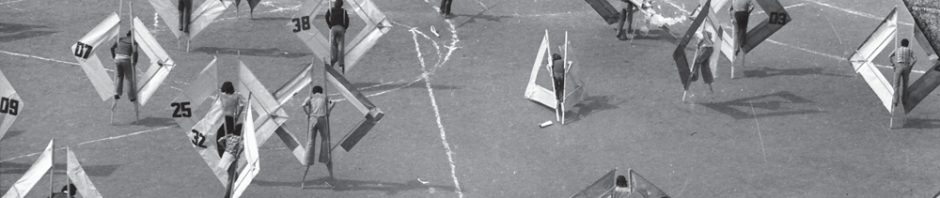
The final presentation … at least the first cycle of it!

xxx
The final presentation … at least the first cycle of it!
xxx
My workflow page
https://workflow.arts.ac.uk/view/blocks.php?id=857013
Books
Kara, H. (2020) Creative Research Methods: A Practical Guide / 2nd Edition. (Bristol University Press)
McNiff, J. Whitehead, J. (2016) You and Your Action Research Project / 4th Edition (Routledge)
McNiff, J. (2013) Action research: principles and practice. 3rd edn. London: Routledge
McAteer, M. (2014) Action Research in Education (Sage Publications Ltd)
Bell, J. Waters, S. (2014) Doing Your Research Project (McGraw Hill Education)
Gray, C Malins, J. (2004) Visualizing Research: a guide to the research process in art and design
Richardson, C. Mishra, P. (2017) SCALE Support of Creativity in A Learning Environment.
Digital
Homan, S. (2025) How to Write a ‘Positionality Statement’ (and Why Positioning Identity Matters in Decolonising Research and Knowledge Production)
Moriarty, B.(2020) Positioning myself as an investigator
Gillett-Swan, J., Willis, J., Kelly, N., & Miles, P. (2025). Decision-making conditions for participatory student voice research at scale: examples from studying vertical school spaces. International Journal of Qualitative Studies in Education, 38(10), 1581–1603. https://doi.org/10.1080/09518398.2025.2452989
https://www.tandfonline.com/doi/full/10.1080/09518398.2025.2452989#abstract
Home (no date) British Council. Available at: https://www.britishcouncil.org/education/skills-employability/tool-resources/vocational-education-exchange/student-voice/student-voice-vocational-education (Accessed: 13 January 2026).
George, T. (2023, April 21). What Is Action Research? | Definition & Examples. Scribbr. Retrieved 5 January 2026, from https://www.scribbr.co.uk/research-methods/action-research-cycle/
(No date a) Getting student spaces right focus on campus changes that. Available at: https://www.aude.ac.uk/media/hahj44f4/ci_gettingstudentspacesright_final_lowres.pdf (Accessed: 13 January 2026).
https://www.aude.ac.uk/media/hahj44f4/ci_gettingstudentspacesright_final_lowres.pdf
UAL Student Communications, (2023) Enhancing our physical spaces
(2022) Guiding policy 3 | UAL. Available at: https://www.arts.ac.uk/about-ual/strategy-and-governance/strategy/guiding-policy-3 (Accessed: 12 January 2026)
Ullberg, H.P. and Saur, E. (2023) ‘Moving In’ – Students’ And Teachers’ Experiences Of New School Buildings, (abstract)
https://eera-ecer.de/ecer-programmes/conference/28/contribution/56567
Mishra, P. and Richardson, C. (2018) (Learning environments that support student creativity: Developing the SCALE
https://www.sciencedirect.com/science/article/abs/pii/S1871187117300196
Salomão, A. (2023) The Art of Interpretation: A Journey through Thematic Analysis
Riding, P, Fowell, S and Levy, P (1995) “An action research approach to curriculum development”. Information Research, 1(1) Available at: http://InformationR.net/ir/1-1/paper2.html
https://informationr.net/ir/1-1/paper2.html#kolbd
Websites
https://www.pescholar.com/research/bera-ethical-guidelines-for-educational-research
https://www.arts.ac.uk/study-at-ual/course-regulations/student-feedback
https://www.arts.ac.uk/students/stories/enhancing-our-physical-spaces
Online tutorial with:
Kwame Baah, Jade Gellard, Jess Curtis, Antonella Norris and me. Antonella didn’t present her ARP due to issues she encountered with the logistics and complex scheduling of her project.
Who: Jess Curtis: Lecturer in Design for Performance, School of Media and Communication London College of Fashion, UAL.
ARP Aim: Developing representation and creating a resource of figurative references for use relevant to the course. Ethical imperative to build a more global, diverse and realistic representation of images used in costume development relevant for course content
Planning and methodology: Jess presented her planning as a series of vivid graphics to reflect her timelines and thinking, captured on the digital platform Miro. She stated that, in doing this level of planning, it had given her a greater sense of her own positionality, revealed a potential to overcome barriers, and helped her understand the impact of this research on her practice and the dynamics of the lecturer-student relationship.
She said she was still a little stuck on the final title – at the time of discussion, she was working with Diversity in Bodies or representation in costume design. I thought both of these titles lacked impact and did not reflect the dynamism of her ARP. When Jess spoke about her project, she used the phrases ‘the performing body’ and ‘the diverse body resource’, both of which reflected the vitality in her research project.
Feedback:
She confirmed that she interviewed actors from diverse cultural and physical backgrounds in order to build the visual resource, then tested it with pilot sessions, gathering conversational feedback, questionnaires/ forms in the classrooms with colleagues and students.
Kwame: How has she analysed her data? confirm methods.
Jess said she had transcripts and was undertaking physical analysis – thematic analysis. How do you represent without bias? She confirmed that she was investigating protected characteristics such as pregnancy, but that this would make the resource very extensive, which it needs to be to be truly effective. How far can you go with this?
Jess confirmed that all images are used with consent through ethical permissions, rights etc.
Kwame stated that Bias is good, so she can start to evaluate particpatory action research. He also recommended adding some research references, such as anchors and pseudoacademics (NB I did not know what this meant).
My thoughts:
Her planning and the realisation of her ARP is EPIC. It is contextual and has a legitimate plausibility. I am excited for Jess with this research project.
Who: Jade Gellard: Specialist Technician (Learning and Teaching) Contour.
ARP Aim: Developing a handout for use within technical workshops for Contour Students, that has improved imagery and messaging that is current and understandable by international students. Designed to be a portable teaching element to fit any room.
Methods: A mock-up of the handout has been used to test quantitative and qualitative data has been gathered through feedback on the old handout vs the new handout.
Jade confirmed that she had looked to Zygotsky’s zone of proximal development to underpin her thinking (* this is the crucial learning space between what a learner can do alone (actual development) and what they can achieve with guidance from a more knowledgeable person (potential development). She also stated that her data analysis on the student feedback wasn’t complete, but she was aiming to respond and amend the handout in the new year.
Feedback:
Kwame: Inlcude visual analysis and highlight the differences in what you are seeing in terms of student preference. This gives it mobility and flex, so you could consider and project what might happen in 5 years.
Jess commented that within her presentation, she was using infographics in line with guidelines from UAL’s disability team, also considering industry standards.
My thoughts: I feel in awe of Jade’s thinking and how she has developed such an relevant, well-considered project.
Who: Sarah Harkins : Associate Lecturer, Architecture and Spatial Design, 3D Design, UAL School of Pre-Degree Studies, Foundation in Art and Design.
ARP Aim: Enhance the student experience, by improving the learning spaces; empowering student voice and creating a legacy.
Methods: Consent forms and questionnaires for participation in the activity were issued in class to both cohorts of the architecture and spatial design students on 08.12.25 and 09.12.25. Feedback to questions was given in words and (some drawings). My planning was a lot less glossy and digital than Jess and Jade’s. As an avid note-taker, I work in standard school exercise books to keep all my notes. So I storyboarded my presentation by hand in my notebook. Data has been gathered, but no analysis has been done yet. My aim is to (hope is to complete the analysis before the final presentation, with a future plan to present the findings back to the students (and probably with more cycles of action and participation to build and strengthen the thinking/conversation – haven’t finalised this yet).
Feedback:
Jess stated that she thought the student engagement forms were thoughtful. She asked if I had considered whether there would be biases involved with my teaching in the spaces? Need to mitigate that in data analysis. She enjoyed seeing some visual responses as well as words. Had I considered how to analyse the drawings? Could KB recommend reading around how to begin that? She also recognised that its good to present the data findings back to the students and still engage their ‘voice’, where they critically analyse their learning spaces. It’s a good confidence-building (for students) activity, as there are direct and peripheral values in activating their agency.
KB: recommends summary and approach divided into 3 sections – things done immediately, things done within the (academic) year and things done in the future. When analysing the data, consider what immediate changes can happen so that students get a sense of progress in their participation. Consider mapping the students over a day (SH research reference – Sarah Wigglesworth and Jeremy Till’s mapping of a dinner party).
Next steps:
Online tutorial with:
Kwame Baah, Jess Curtis, Antonella Norris and me.
This session was a lot less formal, and I am focusing my Blog entry on the feedback I received. I engaged in verbal feedback with both Jess and Antonella, but have not recorded it.
Key points for this tutorial:
I discussed my progress, how I had formalised my aim to enhance (empower?) student voice by fostering conversation and gathering data to improve student learning spaces. Kwame advised that, in terms of timeframes, it would be best to keep it ‘snappy’ and to the point. By keeping moderation in mind, I would be able to resolve issues such as underage consent, which had become a real challenge. Having spoken to colleagues who had already undertaken the PGCert, I had reached no formal solution. Jess was the one to come to my rescue and found documentation on GOV.UK, stating that parental consent was not required (for the type of activity I would be running) for over-16-year-olds. This was a great source of relief, allowing me to move forward with finalising the consent and activity forms.
Kwame suggested that I map out definite things I knew I could do, such as send out an invite for the activity, develop the questionnaire. Consider the cycle.
After the session, I generated a ‘mindmap’ to plan my thinking:
Although not a formal mind map, I found that setting down my thoughts in this format can help me represent ideas around a central theme in a non-linear graphical format (which links to McNiff and Whiteread’s non-linear action research cycle (s)). This is an invaluable approach that I use regularly when researching. It aids brainstorming, can bring structure to projects, and helps organise complex information, making it easier to understand systematic thinking.
And finally: Kwame’s final advice for the presentation.
Next Steps:
Online tutorial with:
Kwame Baah, Jade Gellard, Jess Curtis, Adam Gibbons, Antonella Norris and me.
Apologies were given as I joined the meeting late. Format of the meeting was each student introduced their action research project, and then feedback was given.
Who: Jess Curtis: Lecturer in Design for Performance, School of Media and Communication London College of Fashion, UAL.
ARP Aim: Developing representation and creating a resource of figurative references for use relevant to the course. Ethical imperative to build a more global, diverse and realistic representation of images used in costume development relevant for course content
Methods: How would you collect data? Interviewing practitioners, questionnaire and consent forms participation activity for colleagues and students. How is data collection managed? Imagery use solely for academic purposes.
Feedback:
Jade: use scaffolding and handouts. what about participant effects and bias?
Antonella: voiced concerns about not getting enough participation or feedback – how would you move forwards if this was the case?
Kwame: Consider language requests – how would you plan and manage that? Jess stated that digital iteration of handouts might help translation.
SH: consider identifying key phrases to help with translation issues – although would need to check context.
My thoughts: Excellent research project that could add significant value to promoting global majority representation on the course and beyond. Very exciting, thoroughly explored and credible.
Who: Dr Antonella Nonnis Ph.D. Tangible User Interfaces, Autism, Play, Children, Self-regulation, Neurodiversity, Ableism. Lecturer in User Experience Design at the University of the Arts London | AFHEA. Design School | London College of Communication
ARP Aim: Exploring the role of technology in academia, intersectional inclusion and inclusive environments.
Methods: Has been planning participation activity for student focus group with a funded ‘reward or thank you for participating; issues with funding and thei has impacted the planning/scheduling of the activity.
Feedback:
Anotonella’s connection was glitchy, and I couldn’t follow what she was saying. I have no further feedback.
Who: Jade Gellard: Specialist Technician (Learning and Teaching) Contour.
ARP Aim: Developing a handout for use within technical workshops for Contour Students, that has improved imagery and messaging that is current and understandable by international students. Designed to be a portable element to fit any room.
Methods: Consent forms and questionnaire participation activity for colleagues and students. How is feedback data collection managed.
Feedback:
Kwame: Make the prototype and decide on specifics and map into a timeline. try to decide what is deliverable for ARP and what will come after?
My thoughts: Jade has put together such a robust and plausible research project that could add significant value to the technical aspects of crucial making techniques that could be lost in translation. Jade’s academic research is enviable! The project is very exciting, thoroughly explored and has great potential.
Who: Adam Gibbons: Lecturer in BA Design for Art Direction, Branding Design Innovation Programme Wide. LCC, UAL.
ARP Aim: Developing a visual ‘bank of memories’ and understanding of the local environment by the simple act of going for a walk.
Methods: Non-verbal participation activity for colleagues and students. How is data collection managed and analysed?
Feedback:
Kwame: Timeline
SH: whats the route & why? consider engaging and researching Guy de Bord’s psychogeographies and the derives (mapping) he and the situationists undertook.
My thoughts: I really like this approach, it’s quiet and gentle and can be an activity that could be undertaken at the beginning, middle and end of the course, engaging students in what they see and how it changes through revisiting. I recommended Adam to look at Guy de Bord’s derives and psychogeograhies – a fascinating participatory research process, that might suit ‘the walk’.
Who: Sarah Harkins : Associate Lecturer, Architecture and Spatial Design, 3D Design, UAL School of Pre-Degree Studies, Foundation in Art and Design.
ARP Aim: I was still formalising the question. I am interested in using the quote by Phyllida Barlow “space is something to be explored” Aiming to be more inclusive in the learning environments – how can the students inform change?
Methods: Posters? Questionnaire, participation activity for architecture and spatial design students.
Feedback: sadly, everyone (my peers) had to leave before I got to finish discussing my project.
Kwame: How is data collection managed and analysed? Consider/identify the methods I need to use. clarify the question, plan the activities on a timeline.
My thoughts: While it was disappointing not to get formative feedback from my peers, I understood why they couldn’t stay on the call (I was late to the meeting and they had to return to work). I noted that I would speak to Jess, Jade and Antonella at the next face-to-face workshop.
Next Steps:
Above: Initial timeline! Harkins, S. October 2025
and thanks….
I am a terrible typist, and writing really isn’t my thing.
So for full disclosure, I use AI/Grammarly to help me with grammar and spelling.
For this submission, I have also used it to help me – a few times – with structure, reducing waffle and meeting, where possible, the word count.
I have also used HUMANS to proofread my text, listen to my ramblings and generally support my work, worries and dithering – thank you to my family Barney and Emma (they are the world’s best teachers. FACT), my mum for cattle-prodding (from the grave) me into finishing this course, my friends Karis, Jenny and Ursula, my teaching colleagues for their unwavering support, but especially Fritha, Victoria and Naomi. And of course, my tutors and peers – especially Jess.
First draft of ethical action plan
Final draft of ethcial action plan
FOCUS: ANALYSIS IN PERSON WORKSHOP
Today’s workshop began, as usual, with a reminder to signpost what we should be doing to progress our Action Research Projects (ARPs), with Mallika emphasising the importance of time management. This remains one of my most significant personal challenges (a lifetime of procrastination!), and it framed how I engaged with the session. Mallika and Kwame invited us to reflect on how we were feeling using an emotional colour wheel, prompting an open discussion about emotional states in relation to research. While one of my peers expressed anxiety, I felt unexpectedly hopeful. (Weird for me!) This acknowledgement of emotional positioning and honesty in the group emphasised the importance of not working in isolation and of recognising affect as part of the research process.
Establishing that we were all actually ‘okay’, Mallika and Kwame then returned us to the practicalities of analysis, emphasising the need to map research timelines and reflect critically on where we were with our projects. They introduced the six phases of reflexive thematic analysis (Braun & Clarke, 2022), describing the process as interpretive, creative and situated. The framing of this method helped me understand analysis not as a detached or technical task, but as an active process of sense-making that develops in parallel with the research.
This understanding was reinforced through the session’s core reading, Ch.5, Interpreting the Map, methods of evaluation and analysis, from Visualising Research by Gray and Malins (2004). The authors position analysis and interpretation as central to practice-based research, defining interpretation as the process of identifying patterns, relationships and meanings within data rather than simply reporting findings. They emphasise that interpretation is iterative and reflective, requiring movement between data, theory and practice. Visual strategies such as mapping, clustering, and diagrams are presented as tools for revealing connections that may not be immediately apparent from text alone. I found the examples of idiosyncratic diagrams to demonstrate a diversity in visual research to be both engaging and informative. It highlighted for me how analytical tools can emerge from and be shaped by specific research contexts.
Illustrations, above from Ch.5, Interpreting the Map, methods of evaluation and analysis, from Visualising Research by Gray and Malins (2004). I really appreciated the distinctive, eccentric illustrative responses to understanding research within core text.
Gray and Malins also stress the influence of researcher positionality on interpretation, reinforcing the subjective yet rigorous nature of creative research. This prompted me to consider how my own background, experiences, and assumptions might shape my analysis of the data that I was yet to receive. At this stage, I began to think more about how I might plan, analyse and present data.
Mallika acknowledged that there is no single approach to analysis, drawing on her own research practice using children’s drawings as an example. This further highlighted the interpretive complexity of visual data and reaffirmed the relevance of Gray and Malins’ framework approach. I recognised that my own project would involve participatory methods, likely generating both written and visual responses. At the time, this helped me begin to visualise analysis as a multi-layered, responsive process.
Kwame reminded us that we must account for bias within our analysis. While researcher subjectivity cannot be eliminated, it must be acknowledged and justified.
A live data analysis activity helped to ground this discussion. Working in a small group, we analysed anonymised student feedback collected by Chuck to support the development of an inclusivity manifesto for her action research project. This exercise revealed how participant effects can influence data, including social desirability bias and the tendency for feedback to function as a barometer rather than a reflective response. I was intrigued by this and keen to understand more. I discovered that ‘Participant effects’ within qualitative research refer to being in a study can change people’s behaviour, thoughts, or responses, introducing bias, with key examples being the Hawthorne Effect (changing behaviour when observed), Social Desirability Bias (wanting to look good), and Demand Characteristics (guessing the researcher’s expectations). I felt that I would adopt approaches to mitigate this effect in my activity, aiming to achieve clear, clean data.
Reflecting on this activity, I became more aware of the need to carefully design my own research methods to mitigate such effects. For me, the workshop ultimately clarified analysis as a reflective, interpretive and ethically situated practice, reinforcing its central role in producing meaningful and credible outcomes within my own action research project.
References
Gray, C. and Malins, J. (2004) Visualising Research; Chapter 5, Interpreting the map, methods of evaluation and analysis.
Braun, V. and Clarke, V. (2022) Thematic analysis: A practical guide. Los Angeles: SAGE.
https://en.wikipedia.org/wiki/Hawthorne_effect
https://www.sciencedirect.com/topics/psychology/social-desirability-bias