08.02.2023 Microteaching

Object Based Learning Workshop

Attending: Lindsay (Course Leader), Sarah Harkins, Sakiko Kohasi. Marion Lagedamont, Emilie Loiseleur, Matthew Needham. 


I was quite anxious about this particular workshop. I hadn’t appreciated that the workshop would be with a small group of peers from my PGCert cohort. The pressure felt real! When I discovered that Lindsay structured it for 5 of us – I was SO RELIEVED. I don’t mind talking in front of a large group & my student group is over 50, but I felt anxious about this. I suppose it’s that feeling of being judged, or not knowing enough to be interesting. However, the people involved in this workshop were articulate and engaged with their feedback – which was constructive and thought-provoking.

I prepared for this session by discussing the workshop with one of my ASD (Architecture and Spatial Design) teaching partners Ursula Dimitriou and by reflecting on a project, Heterotopia (worlds within worlds). The ASD students had worked in collaboration with the CSM Museum & Study Collection1. The project objective was to design a public engagement space for the CSM Museum; investigating and reinventing this institution within the University. There was a pre-selected range of objects from the archives to trigger a speculative design exploration through experimentation with form, material and narrative to activate social engagement and design a space where the public can interact with the chosen object(s). Referencing Gillian Roses’s ‘Visual Methodology’2, she suggests a four-staged approach to analyzing artworks and images; describing four stages as four sites; the site of production, the site of the image, the site of circulation and the site of audience. Students were asked to cross-reference further aspects of analysis: Technological, Compositionality and Social; to help them develop an approach to their Heterotopia socially interactive program.   

For this session I decided to use the object of a toilet; a socially interactive object, vessel for the most basic of human functions and is a fundamental architectural consideration in most architectural projects. I would position this exercise as a collaborative discussion to stimulate further research, informing a design proposal.  

I introduced the toilet and the notion of ‘public convenience’ and asked the participants to work in pairs, investigating and interrogating the object and, I asked them to consider the following themes: historical, political, social, cultural, behavioral, economic, and environmental. The outcome would be a mind-map. I then asked them to discuss and consider/ apply the themes what the object could become?  It was quite fast-paced (20mins) and I feel it initiated some interesting discussions and I got some good critical feedback within the Developmental & Affirmation feedback sheet; “how do you include students who feel uncomfortable to talk about that object”. This comment would impact designing/planning and teaching/support aspects of teaching that I seek to include in future planning, ensuring that discussions about potentially sensitive issues are inclusive for students ‘with diverse educational backgrounds and achievements’ (Grace and Gravestock, 2009)3 

All the presentations instigated insightful discussion. Some I was more engaged with others – Matthew’s workshop looking at t-shirts, made me consider sustainability and disposable fashion more consciously. Emilie’s was really complex and challenging, asking us to consider objects less laterally. We arranged objects according to age, size, use, emotional value. Marion’s presentation asked us to consider ‘Desire Lines and Affordances’ and she asked us to be ‘design detectives and identify flawed designed objects. I didn’t fully engage with this activity but it did provoke me to do more research on affordances after the session4. Sakiko’s presentation extended from a studio project. Asking us to question human scale in our space using architectural scale models of people – place it, photograph it, title it and discuss our outcome. I felt it got us excited, moving around the room – what could we use? How could we represent human scale in this dull, small room? Lindsay’s outcome was incredible, she managed to capture her scale model, all of us and herself in her panoramic photograph. I enjoyed this most because it was intrinsic to the subject I teach. To give the exercise a deeper context, Sakiko referenced the work of Abigail Goldman5, a Journalist and investigator with the Public Defenders Office (Bellingham, WA) who makes ‘Dieoramas’ reflecting her attraction to the macabre, capturing gruesome murder scenes in miniature (diorama)6

refs

1 https://www.arts.ac.uk/colleges/central-saint-martins/about-us/museum-and-study-collection

2 Rose, G. (2001). Visual Methodologies: An Introduction to the Interpretation of Visual Materials. Thousand Oaks, CA: SAGE Publications.

3 Grace, S and Gravestock, P (2009). Inclusion and Diversity: Meeting the needs of all students, Routledge, London. 

4 https://medium.com/@chiwonkim/14-examples-of-desire-line-314576d97c94

5 https://www.abigailgoldman.com

6 https://dictionary.cambridge.org/dictionary/english/diorama

Posted in portfolio | Leave a comment

25.01.2023 PgCert Academic Practice

Lindsay Jordan & John O’Reilly 

Today was the first time I actually met my cohort in person and it was such a relief to meet them. I realised pretty quickly that none of them had two heads or were ogres and that I had a very over-active imagination. Phew. However, I also realised pretty quickly that due to work commitments I had also not done the preparatory reading or prepared resources for today. (This rather put me on the back-foot). We started off with an introductory ice-breaker looking at with quotes about education and learning. We worked in groups of three, we had to pick one quote, discuss and evaluate it. I was working with Ellen and Ernesto. We picked the following quote no.4: 

‘If students’ initial ideas and beliefs are ignored, the understandings that they develop can be very different from what the teacher intends.’ 1

We stated that we felt it was about learning to listen, to encourage not ignore. That building a good working relationship with our students was crucial to enabling learning. We also discussed how we can make time to listen and understand our students. Our group were interesting as we had different teaching experiences where by Ellen had large cohorts (100+ students) and little time. I dealt with a medium size student group (50+) so have more opportunity to get to know more of the students personally and Ernesto had a smaller teaching group and was able to really get to know and understand his students. We felt that the larger the cohort, the chances of building meaningful tutor-student relationship reduced. We also discussed that initial discussions with students played a significant role in building relationships – which when you have a large cohort can be more complex (for say Ellen or myself but easier for Ernesto). 

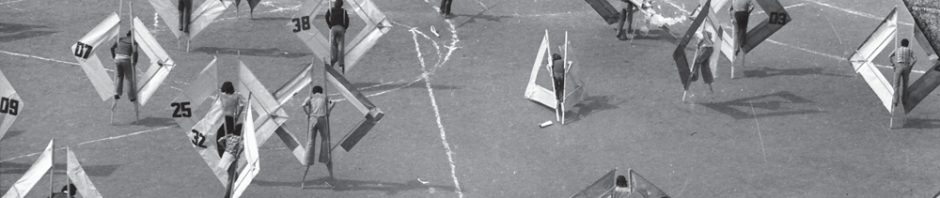
Following on from this we working in pairs to do the next part of Learning design workshop, where we shared a brief. I worked with Ernesto and although neither of us had not prepared for this, I was able to share a brief that I had developed for foundation and we used that as the example. The brief was for a project called Wearable Architecture. I showed Ernesto the brief and gave him a breakdown of what the project entailed; how students build an understanding of human scale within the built environment; they explore big ideas and problem-solve through collaborative and individual work. It serves as conceptual social interaction where ‘Site, User and Function’ and they are introduced as key elements underpinning spatial practices. The project order is collaborative ideation and knowledge gathering, leading to independent opportunities to develop personal agency. It culminates in students making a wearable structure that forms part of a collective performance that is mapped at a chosen location and group-based critique, where peers give feedback. Ernesto was interested in the project but wanted to have clearer guidance of how the physical choreography of mapping works in terms of teaching. We discussed this and used this as the basis of the next exercise to develop of the workshop, to generate a poster presentation of the possibilities for redesigning your artefact (the brief). We focussed on the performance element as it responded to both our subjects (me = architecture, Ernesto = film) and we agreed on making a storyboard to plan the choreography of the mapping. We didn’t get to finish it and I’m not convinced we actually got the exercise right, when looking at all the other posters that were made by our colleagues, who had addressed approaches to learning. I felt this was a great breadth of response – so much thinking about learning, but when making this comment, Lindsay pointed out that there could have been less broad and that there were maybe too many pictoral responses (but – we are creatives…so….) as they might not connect with learning outcomes and that being too broad they become meaningless. 

posters exploring possibilites

We discussed the trying to get student to interpret learning outcomes as a visual understanding – does this help them comprehend questioning and analysing and that we should learn to question what we know. Lindsay suggested we should look at the “Course Designer Toolkit’ which refers to policy and institutional strategy. 

In the afternoon, we worked in groups of 4, in a fast-paced timed exercise. Each table had a large sheet of paper and pens. We had to consider benefits and the challenges of a particular mode of teaching as follows:

  • One-to-many teaching / lecture 
  • Small group teaching / demo, seminar, workshop, studio
  • One-to-one teaching / tutorial
  • Crit / presentation

We were given 5 minutes per table/mode. Then we had to complete a second cycle, but this time considering any strategies that capitalise on the benefits/opportunities given and also address or respond to the challenges.

One to one teaching
Small group teaching
Lectures
Presentation/Review/Crit

The outcomes evolved as visual mind-maps. We found that as we went around the tables, we saw the other groups had also had the same approaches/thoughts, but it was good to be able to build on other groups comment, expanding thoughts and exploring pedagogic methods within the teaching/learning modes.

The final exercise of the day reviewed Assessment Criteria. We looked at the learning outcomes for the TPP unit (see below):

We discussed how can we weave theory policies into our practice(s) and how do we evidence this? across the group we commented that this can happen through developing a manifesto of idealogical theories – in planning and analytical reflection, which is evidence in brief development, – structured learning through lectures and workshops to see progression and realisation and throughout the process encourage feedback (tutor to student, student to tutor) which is crucial. Ernesto made an observation that it was like telling a story ‘In the beginning Jane ….. and Jane lived happily ever after’ – it was a funny comment & made us laugh but he had a good point – you need to build context with ideology and theory to inspire discourse, we need to record processes, reflect and analyse within our teaching structure.

Our final exercise of the day, Lindsay asked us to use a grading matrix to gauge where we felt we were in terms of understanding LO1 (interpret theories, policies and pedagogies in the context of your evolving practice) . We has to write what we felt was the criteria for each of the grades (A-D) and then mark where we felt we were. I felt very much that I was sitting between B & C. I have done some but recognising where I am shows I need to do more!

I feel very much that the learning and assessment criteria is very linear but the creative industries don’t always respond to linearity and are often much more fluid (see below diagram!)

It was a great day – my mind felt stretched and was buzzing with what had been experienced and discussed.

Action Plan:

  • BLOG!!! sort it out

1 Bransford, J.D., Brown, A. L., and Cocking, R. R. (Eds). 2000. How People Learn:
Brain, Mind, Experience, and School.
National Academy Press: Washington D.C. p.10.
Available as a free Download: How People Learn: Brain, Mind, Experience, and School: Expanded Edition

refs

Posted in portfolio | Leave a comment

18.01.2023 – Briefing Session – Observations of Teaching practice

Unfortunately, I couldn’t join this session in real time due to teaching, but watched the recording. A very interesting session presented by Lindsay Jordan. The session started with input from everyone inputting (onto the collaborate whiteboard) stating how they felt about observations. I thought the whiteboard responses were quite illuminating. There was were some anxious (negative?) comments and I’m not sure I share this sentiment. I’ve already arranged my observation with Catherine. I view observations as a great opportunity to grow as an educator and I welcome constructive criticism because it really is the only way for me to look objectively at what I’m doing, (which is something I’ve been doing for quite some time now) and I use the feedback to think about how I can improve my practice and that can only be beneficial for students, colleagues and myself. There was a really interesting comment. “What happens if I am awful?”– such a candid comment and rings true! I guess we all have bad days and things don’t always go to plan even with the most watertight of lesson plans, a session can have hiccups and include unforeseen incidents, so its about learning to respond in a in a positive way to any unplanned issues and we can use our experience as rational educators (I live in hope! ha ha) in our understanding of the learning outcomes to reassure students that can can learn as was originally planned.
There was an interesting case study for us to look at (which obviously I’ve done after the event, so I wasn’t active in comments that were coming from the PGCert’ers), and there was quite a lot of debate that was put up on the whiteboard.

I felt the case study tutor ‘Stephanie’ was more interested in her research job and felt more inspired by that. She seemed reluctant in her teaching role. She had been given some negative feedback from her students which made her question her teaching methods. I wondered whether there were some processes that she uses in her research job that she can bring into the classroom to invigorate the content and how she is communicating it, so that she can re-build confidence.
The case study talks about how she observes a colleague who is perceived as ‘charismatic’. I don’t think that is necessarily a bad thing or that its gender thing (based solely on the information in the case study), although this was a male tutor. He comes across as opinionated, with the tendency to plant his strong opinion on the students. I don’t think that’s justifiable in a teaching environment and I believe, although she is hesitant, she should give him some constructive criticism, which could improve his teaching methods. She could suggest, using evidence or examples from her own practice, that he aims to less subjective when discussing the content of his lectures and offers a more balanced approach so students can make form their own opinion through research.
This made me think more about my own practice and how I support present briefs and information to students – I had to ask myself the question “am I too opinionated when presenting certain information to students?” it’s not a great realisation that – on occasion – I might tend to do that. Lessons to be learned from reading this case study and I must consider this when planning my sessions, given that I will be observed on 9th Feb – this is crucial. 

ACTION PLAN 

  • Review lesson plans (for studio based activities on FAD – ensure plans include relevant information & evidence to support. 
  • BLOG!!!!!!! Must resolve …. 
Posted in Others | Leave a comment

Tutorial with Catherine Smith 18.01.2023

Having had a week stressing about the PGCert, I had my first tutorial with my tutor, Catherine Smith (Sergio is away for the next month or so). Aaaaaand… I got all anxious about it and was emotional. I realise that I had been building up the expectations for the course in my head and allowing myself to spiral into ‘I don’t understand/don’t know what I’m doing’ state of nerves. It’s not healthy obviously but Catherine was so reassuring and made me feel more confident moving forwards. She said that possibly I am overthinking the issues, and that of course its complicated being a working tutor that then becomes a student. And I think that there is a lot of truth in that. Hearing spoken out loud was pretty cathartic. 

We discussed the peer observation. I was happy to discuss that. I enjoy being in the studio (or classroom) and talking to a large body of students. we agreed a date 9th Feb. 

Catherine also asked me what I was interested focussing on this year, and I’ve confirmed Blended Learning. Whilst I’m not an advocate of total online learning, during the pandemic my colleagues and I worked hard to ensure that the online content responded and reflected the expected learning outcomes, ensuring that we set engaging tasks to enhance the experience and maintain engagement (which is very difficult). As a result I can see the benefits of delivering parts of a creative course (architecture for example) with online components. For example, on the foundation, contextual practice has portions (some lectures) that are delivered (coursewide) online. This is successful on a couple of practical levels 1) large course 500-600 students) & not enough space to house all students at the same time, and 2) the lectures are recorded so for those learners who either miss or need to re-watch to fully comprehend the lecture & required tasks, it can be beneficial.

Catherine also encouraged me to attend the in-person lectures on Weds 25th – which is my plan. She emphasised that meeting and engaging with others in my cohort is worthwhile. I am looking forward to it.  

How do I feel after my tutorial?  I am reassured that the choice to do the PGCert is a good one, that I will benefit from. I feel more confident now that I have a research path to develop & understand. 

ACTION PLAN

  • Rewatch/listen to WEDS 18th session. 
  • Continue researching – CS suggestion ‘places.com’ 
  • HELP WITH THE BLOG (this is getting urgent now)

Posted in Others | Leave a comment

Hello PG CERT! TPP – Day 1- 11.01.2023


So my day one didn’t go quite as planned …. unfortunately I had a clash with a teaching day so was unable to attend Day One with my cohort. This has put me at a huge disadvantage not being part go the wider ‘conversation’. Having checked out the Padlet for my cohort, I instantly felt out of my depth. The pedagogic language bamboozled me and put me right back into the exam hall for O Level History.  FEAR. This was my most hated school subject (although I feel I should confirm that I enjoy history generally but not how it was taught to me aged 16). Recognising this has been a good thing (although the anxiety that comes with it not so great) as I have experience and know that there are people to reach out to to help me overcome this – likely this is a case of the teacher becoming the student.

With this in mind I selected a paper from Spark, the UAL Creative Teaching  and Learning Journal (Vol 5/ Issue 1/ 2022) on Introducing Technical Architecture Digitally by Ciaran Malik. Having taught at Interior design BA level in other institutions and Architecture on Foundation at CSM, we have experience how complex it is to combine the practicalities of learning & understanding architecture but through a digital platform. And I feel confident about using this as a source for what I believe will be my main subject of interest for the PGCert – which is Blended Learning. Having had to engage in some level of blended learning over the last 3 academic years.

My parting shot for this entry is the Blog. THE BLOG. I feel like a luddite with this. To be clear I love technology, but I realise I need to get my head around this and quick.

ACTION PLAN

  • Rewatch the afternoon session for all. Make a list of points & action
  • Find technical help for the Blog! ONGOING
  • More research on blended learning

Posted in Others | 1 Comment